Showing posts with label Sustainability. Show all posts

Sunday, May 12, 2013

Webinars and other events worth tuning in on

Webinars seem to be the newest craze for businesses to spread information about sustainability. In this summary of events for the following weeks and months of sustainability and ethical fashion events there's an overweight of webinars. Here's a few of the ones I'm looking forward to.

Textile Exchange Collaborative Learning Series - Topic 3 Holistic Value Chains

May 13 or 14. This one is a great perk I get for working at a member company of the Textile Exchange. Last session on sustainability measurements was very interesting and I'm sure this one will be too. The conversation will be on how vertically integrated textile businesses benefit from a shorter and more secure supply chain. There's a cost if you're not a member, check it out here.

Accenture Sustainability24 - one day to set the future for business

May 15. This global broadcast is a 12-hour marathon of industry-wide discussions on sustainability including titles such as "Driving business growth while solving the global food challenge" and "Circular business: Value Generation in a resource constrained world". Panels will consist of senior executives based in the 12 chosen business hubs around the world. It may be clever marketing, but it's great insight into how big business think and talk about sustainability. I'll be listening in on the following sessions:


  1. Sustainable Consumption: Engaging Tomorrow's Consumer
  2. Sustainable Supply Chain: Why it is Good Business
  3. Innovative Business Growth: How Sustainability is Reshaping Businesses for the Future


Register yourself here. It's totally free and so far I haven't had to sign up to any irrelevant newsletters.

Better Lives lecture series at London College of Fashion

My university have just recently appointed a psychologist who has put together this series of lectures exploring the link between fashion and psychology. Over the course of 4 free lectures held at the Oxford Circus building leading psychologists are brought in to discuss fashion's impact on our well-being with the researchers at the Centre for Sustainable Fashion. You can read more and register here.


Source Summit: Momentum

Following the Bangladesh building collapse the different ongoing campaigns to raise awareness of the working condistions in sweatshops across the developing world have finally received the attention they deserve. However, building momentum is a challenging task that this Source Summit will focus on. How can we accelerate the momentum created around this incident and ensure that sustainable fashion becomes larger than a fad? The event is expensive, but considering the influence of the Ethical Fashion Forum members and the programme there is no excuse to miss this highlight in the ethical fashion calendar. Read more.


Thursday, March 21, 2013

Growing Communities

I've been meaning to post this for such a long time. We just got our third veg box/bag from Growing Communities with loads of fresh organic veggies. The bag has gotten better every week with basic things like potatoes, onions and carrots. Last week we had a stir-fry bag filled with funny leaves that I'd never tried before. The only one I knew was wild garlic, so I just chopped it all up and fried it with lotsa garlic, chilli and soy sauce - uhmm!


It feels really good to get veggies that still have dirt on them. It's so artificial that you literally can't see a sign of where supermarket vegetables come from here in the UK. I'm not saying it's much better in supermarkets elsewhere, but even in Greenland the potatoes have a little dirt left on them. It's also kind of scary to see how organics vegetables deteriorate so much faster than what you get from the shops. Our supermarket culture teaches us that courgettes can last a week or more, when really it starts shrinking and getting a little yucky after 2-3 days. The whole thing about tempered storage, reduced oxygen and extra carbon dioxide in the atmosphere around the green aisle and waxing makes an immense difference to our ways of treating food. We've come to expect these things rather than question how exactly those tomatoes from Chile made it all the way here and are still edible after a week.

Well, I also made it to the farmer's market in Stoke Newington a few weeks ago. There was a really nice atmosphere and all the stallholders were friendly answering my questions about weird breads and the possibility of finding some grains around.


My friend from back was visiting at the time, so I had a great time showing her around London. It was quite by surprise that we even found the market, but it's on every Saturday 10am-2.30pm. Maybe I'll see you there this Saturday?

The deets: The veg boxes that Growing Communities sell are by far the cheapest if you live around Hackney. In our flat it's quite helpful that we have 2 full days to pick up the bag rather than trying to make sure someone's home. There are so many nice places to pick up from - Hackney City Farm, cafés and green grocers. Next month I think we'll change to an organic grocery store so we can stock up on a few other good things at the same time. It's supposedly one of the benefits of (comparatively expensive) Abel & Cole that's there's a great pantry to choose from. The standard veg bag keeps our flat well stocked for the week, but then 1 out of 4 has been too stressed to cook slash away since we started on the scheme. The no pots bag is definitely worth considering if you're like the rest of our generation - pasta is just all we know, and we should admit it like Fred in Portlandia.

Monday, February 25, 2013

Get your mood up - It's Fairtrade Fortnight

I'm having a really really shitty time being fresh enough for work, but not fresh enough to enjoy it. In a minute it's Girls-time, but I just want to remind you all that it's Fairtrade Fortnight and so we should all take a little care to buy the better tea and the appreciate what we can give to those who worked hard to grow it.

If you can get small amounts of aid as close to the action as possible, as close to the need as possible and as close to the energy as possible, you are far more likely to have an effective return on investment. Michael Gidney, Head of Britain's Fairtrade Foundation
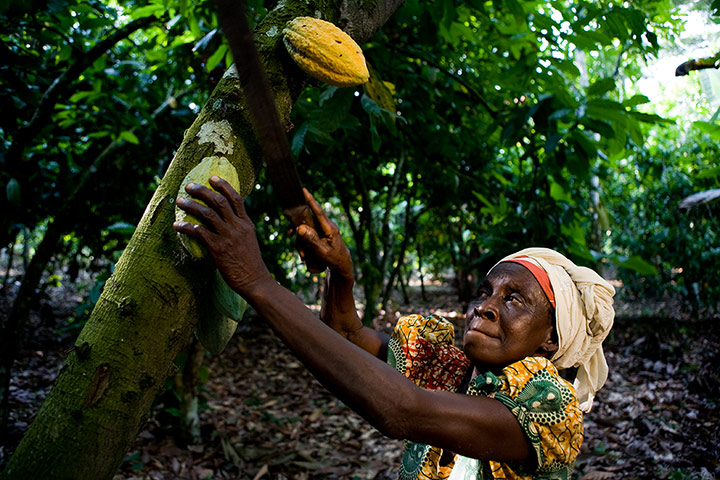
 Fairtrade products not only support farmers in getting a better price for their crop. The premiums used for communal purposes like schools and welfare are enabling the farmers to learn more sustainable practices and gives the next generation a chance to get a better education.

Photo: Simon Rawles
Furthermore, as we're "Taking a Step Further" this fairtrade fortnight, I'd like you to remember that the Fairtrade Foundation is just another brand. The fair trade ideology can be implemented in many different ways. Did you for instance know that Fairtrade hasn't yet made it to East Africa?

Thursday, February 21, 2013

Phannatiq at Esthetica LFW

I cannot believe our house wi-fi decided to disconnect just when I have loads of material queued up for the blog. I also can't believe I survived being internet-less for 48 hours. Phannatiq is a brand that I've been super eager to share since I met Anna Skodbo at her Esthetica stall on Sunday.


Phannatiq is inspired by Hackney both on a great night out and the long walk home in the morning. The tights and ready-to-wear collection are printed with scenes of metropolitan decay using natural dyes. Like the origin of the dyes contrasts the urban motif, so do the soft and feminine silk lengths contrast with the rawness of fig tree bark. 


I ended up talking to Anna about the plant material used to create the yellow. Annatto is totally natural and we eat it is minuscule amounts every time we have cheese - so who's to say we shouldn't dye our clothes with it? I love the way the fabric has texture and colour depth / variance but is far from being tardy washed-out hemp. Click here to watch her SS13-film.

Wednesday, December 5, 2012

Bestseller calls Detox campaign 'unreasonable and hypocritical'

Reading the Ecotextile Newsletter today I was absolutely shocked to find that Bestseller apparently refuse to 'Detox' with Greenpeace's campaign. The argument that they use is that their clothes is perfectly safe to wear and that what they already do is enough to save the environment. However, a quick Google search came up with this from 2011:

Two industry heavyweights in Denmark, IC Company and Bestseller, also made headlines with the exposé of dangerous chemicals in their textiles. After serious media attention specific targeted at Bestseller, both companys decided to take specific measurement to deal with the situation. IC Company decided to go public with an ad-campaigns warning customers in several countries against the problematic textiles and costumers were offered compensation.
Bestseller just released their very first Sustainability Report which will be an interesting read for everyone after this claim. I'll get back on this later...

Wednesday, November 21, 2012

Arunachalam Muruganam is fantastic

Sanitary pads are not as difficult to get your hands on in Delhi as one might think, but if you go out in the countryside you will find it a struggle. I had already heard of Arunachlam's project, but seeing his TED talk really makes you understand what a great man is needed to come up with an idea like this.


While I back his mission to make sanitary options available for Indian women across the sub-continent, I also think it's important to consider the environmental implications of the possibility that everyone can produce their own pads. I use a menstrual cup myself (Lady Cup and Diva Cup are the major brands) and although I was kind of critical in the beginning, I have really come to love the simplicity of it. Imagine this - you will never be out of pads or tampons again. You just empty, wash and move on.

For the women who haven't gotten used to the throw-away culture this product is perfect. It would be perfect if evolution of pad usage skipped the tampon stage in the poverty ridden areas of the globe and went straight to long-lasting solutions like menstrual cups. The only problem for its spread in India, is that menstrual cups are an expensive investment. You buy it once and it lasts you years, but rural women just can't take chances with their money like that.